
Date uploaded: 2022-10-12 19:31:43
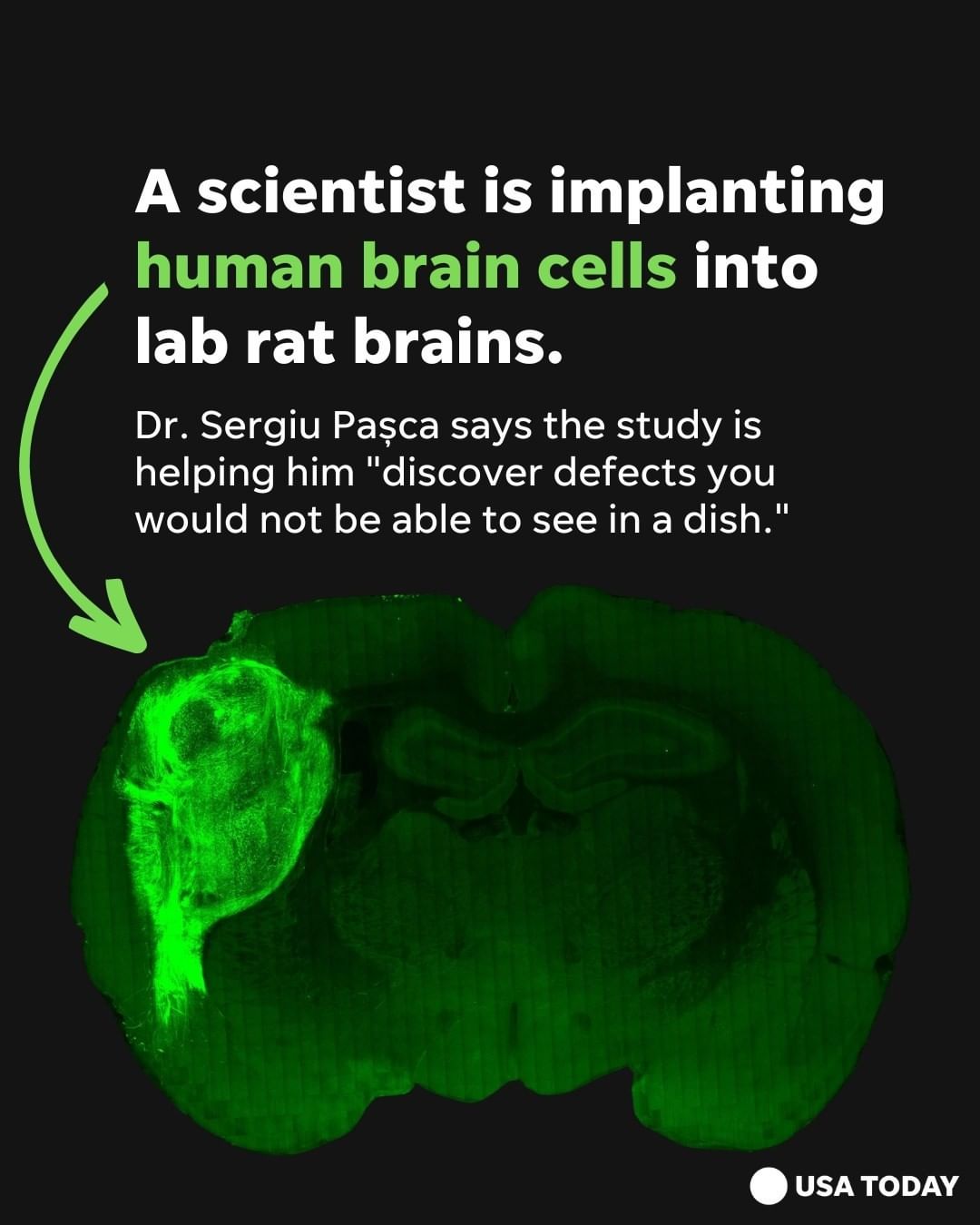
In Dr. Sergiu Pașca's research lab at Stanford University, the resident rats have clumps of human cells in their brains.
Blow on a rat's whiskers and the human cells on the opposite side of its brain light up. Teach a rat that it can get water from a spigot only when its human cells are activated and it will learn how in about two weeks – it's proof, Pașca said, that the human cells have integrated into its brain and are performing an important function.
His experiments, published Wednesday in the journal Nature, are both significant and ethically challenging.
Pașca, a professor of psychiatry and behavioral sciences, believes his work will eventually help scientists better understand the psychiatric conditions that plague more people worldwide than any other health issue.
Brain conditions such as autism and schizophrenia do not naturally occur in rodents and scans don't reveal enough about human brain cells in action, so they aren't well understood or treated.
Read more about how the research is helping us understand the human brain at the link in our bio.