
Date uploaded: 2022-08-06 14:38:10
The nation's largest drugstore chains have come under scrutiny in recent weeks for policies that allow pharmacists to refuse to dispense birth control if doing so conflicts with their religious or moral beliefs.
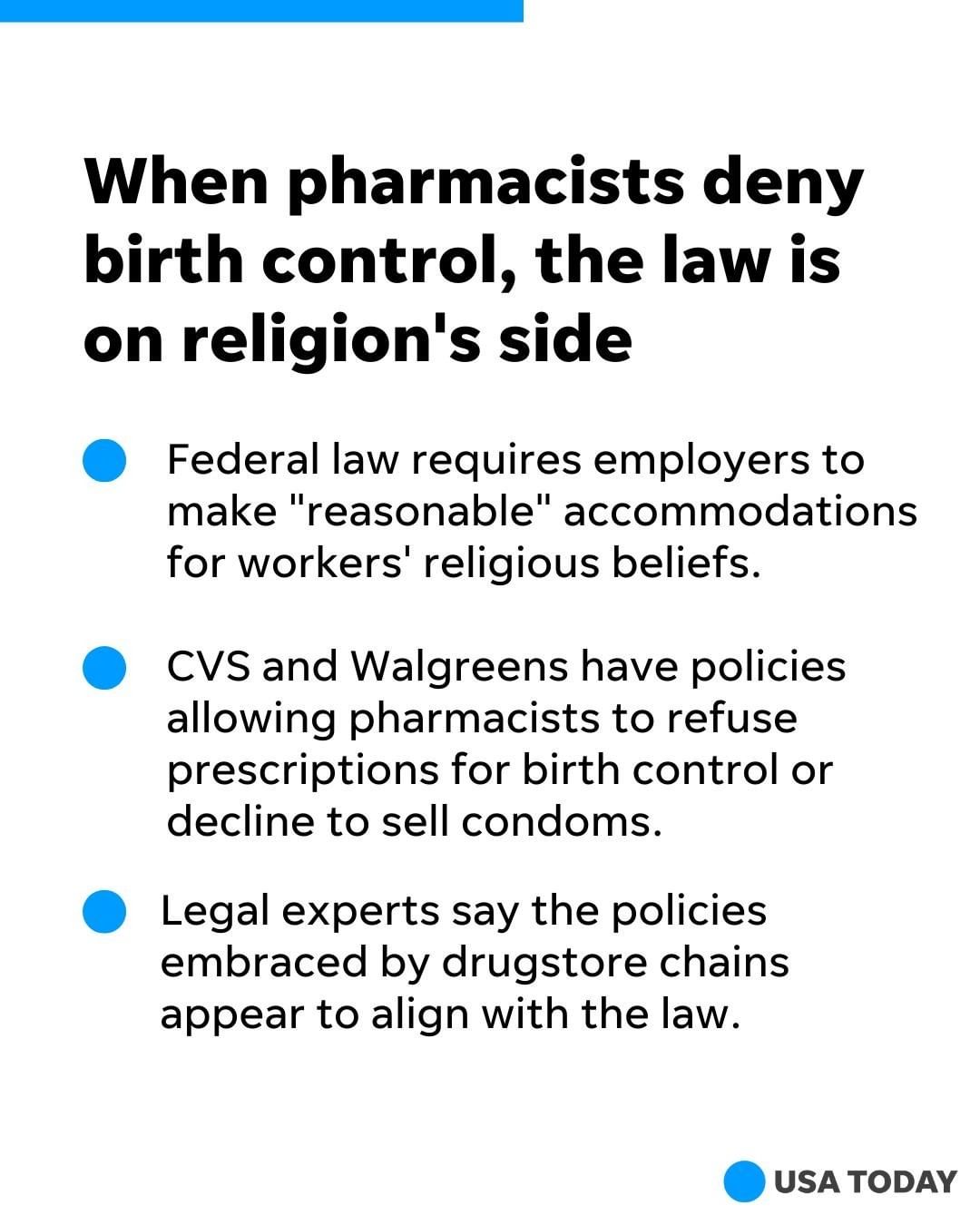
For the most part, experts say, the law is on their side.
Title VII of the Civil Rights Act of 1964 requires companies to accommodate workers' religious beliefs as long as the request doesn't create an "undue hardship" on an employer. Just how far employers must go is open to debate – but the Supreme Court has repeatedly signaled an interest in expanding religious rights, not limiting them.
CVS Pharmacy told USA TODAY last week that it has a policy similar to one adopted by competitor Walgreens, allowing pharmacists to refuse prescriptions for birth control or decline to sell condoms. Those policies have sparked outrage on the left and a flurry of viral social media posts. But the companies, experts say, appear to be doing what the law requires.
The companies have stressed that if a pharmacist has a religious or moral objection to contraception, the prescription or sale would be handled by another pharmacist.
After the Supreme Court's decision to overturn Roe v. Wade and end the constitutional right to abortion it established in that 1973 case, there has been considerable angst over whether contraception will be next. The court's majority said the abortion ruling wouldn't affect contraception or same-sex marriage.