
Date uploaded: 2022-07-03 01:04:38
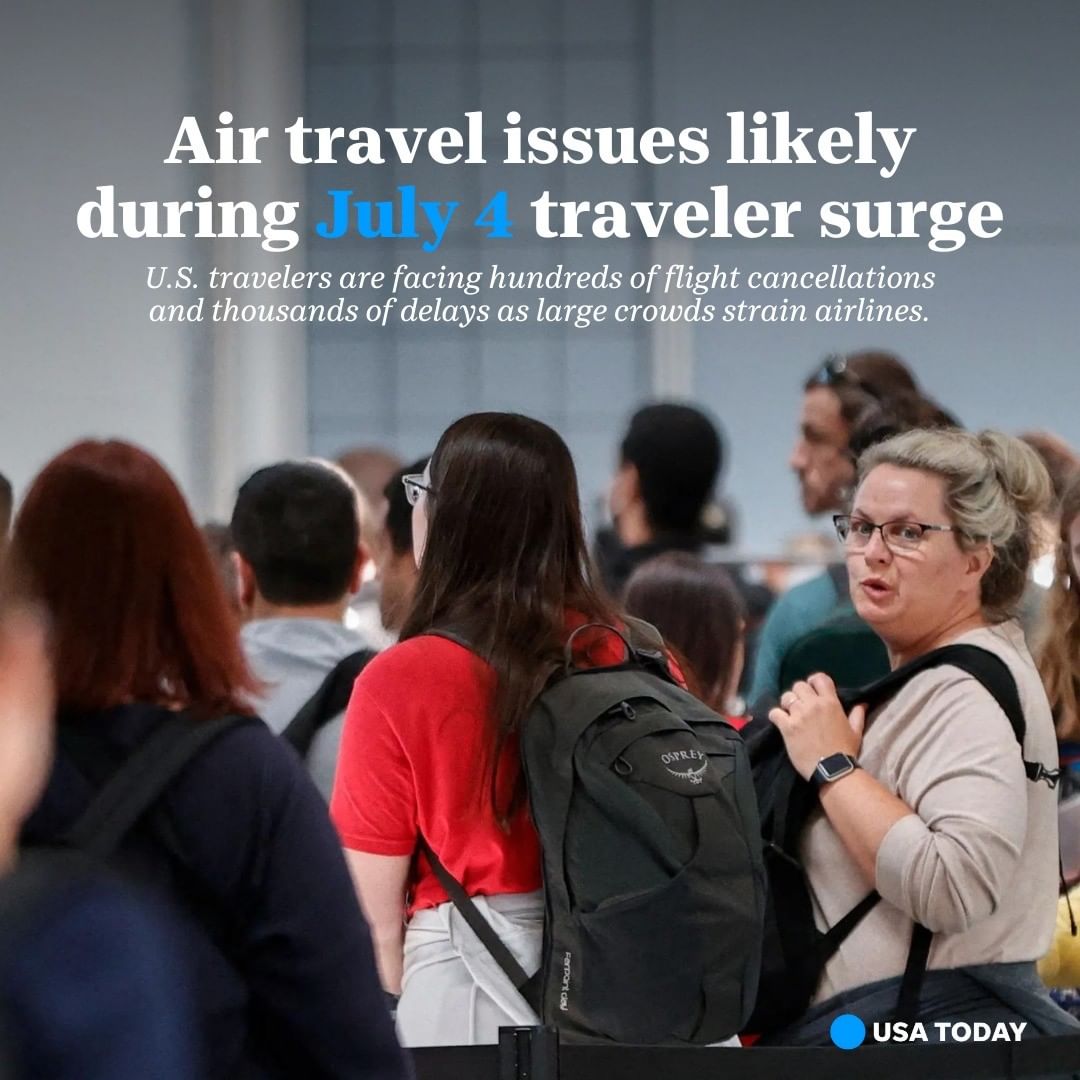
Demand for flights is up, and airlines are stretched thin trying to get people where they want to go. For travelers, it's more important than ever to be patient and ready for changes, especially heading into a holiday weekend that's sure to bring even bigger crowds to the airports.
As of July 1, more than 3,090 U.S. flights have been delayed and over 600 U.S. flights were cancelled, according to FlightAware, which tracks flights in real time.
The climbing delays and cancellations arrive as U.S. airports experience the largest crowds seen since before the COVID-19 pandemic began. More than 2.49 million passengers went through security checkpoints at U.S. airports, according to figures released by the Transportation Security Administration, surpassing the "pandemic era" high of 2.46 million reached earlier in the week.
The Federal Aviation Administration warns that things could get more difficult as summer storms threaten to cause problems in large swathes of the country.
In the U.S., the biggest problem this summer has been a shortage of pilots.
Airlines don't have enough people on staff to fly all the flights they scheduled in many cases, and with rosters stretched thin, it's taking extra time for carriers to recover when something goes wrong.
On top of that, airlines say, the Federal Aviation Administration is struggling with staffing at some of its air traffic control centers, which can lead flight departures to be pushed back until the controllers have the bandwidth to handle more incoming planes.
“We need more pilots to enter into the profession as an industry, as a country, that’s important. And until we address certain things to enable that to happen, this is going to become increasingly acute,” Andrew Levy, CEO of ultra-low-cost carrier Avelo Airlines told USA TODAY. “The result is going to be less air service in this country and people will pay higher fares.”