
Date uploaded: 2022-05-18 14:55:29
As the weather warms, snakes become more active, which could increase your chances of getting bitten. The majority of snakebites are recorded from April to October when both snakes and humans are the most active outdoors and likely to cross each other’s paths.
According to the Centers for Disease Control and Prevention, 7,000 to 8,000 people are bitten by venomous snakes each year. Although snakebite deaths are rare – about five annually – the risk of permanent injury or a long-term disability is higher, according to Michael Daignault, an ER doctor in Los Angeles.
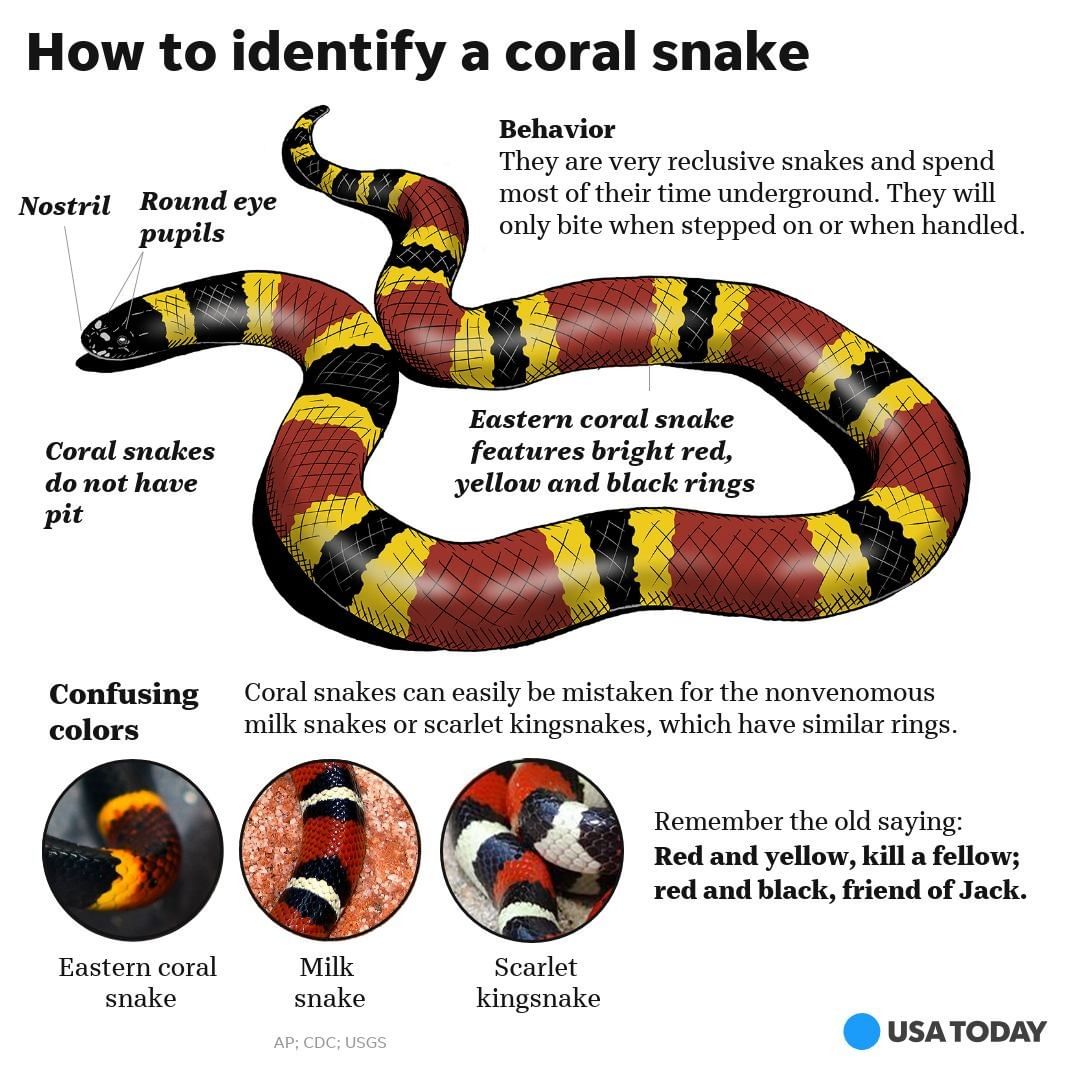
99% of snakebites in the USA are from the pit viper (Crotalidae) family of snakes, which includes rattlesnakes, copperheads and cottonmouths or water moccasins. They're called pit vipers for small, heat-sensitive pits below their eyes, which allow them to detect and locate their prey. Coral snakes are a member of the cobra (Elapidae) family. Coral snakes have the most potent venom of any snake.
Only four states do not have native venomous snakes: Alaska, Hawaii, Maine and Rhode Island.