
Date uploaded: 2022-04-08 22:16:31
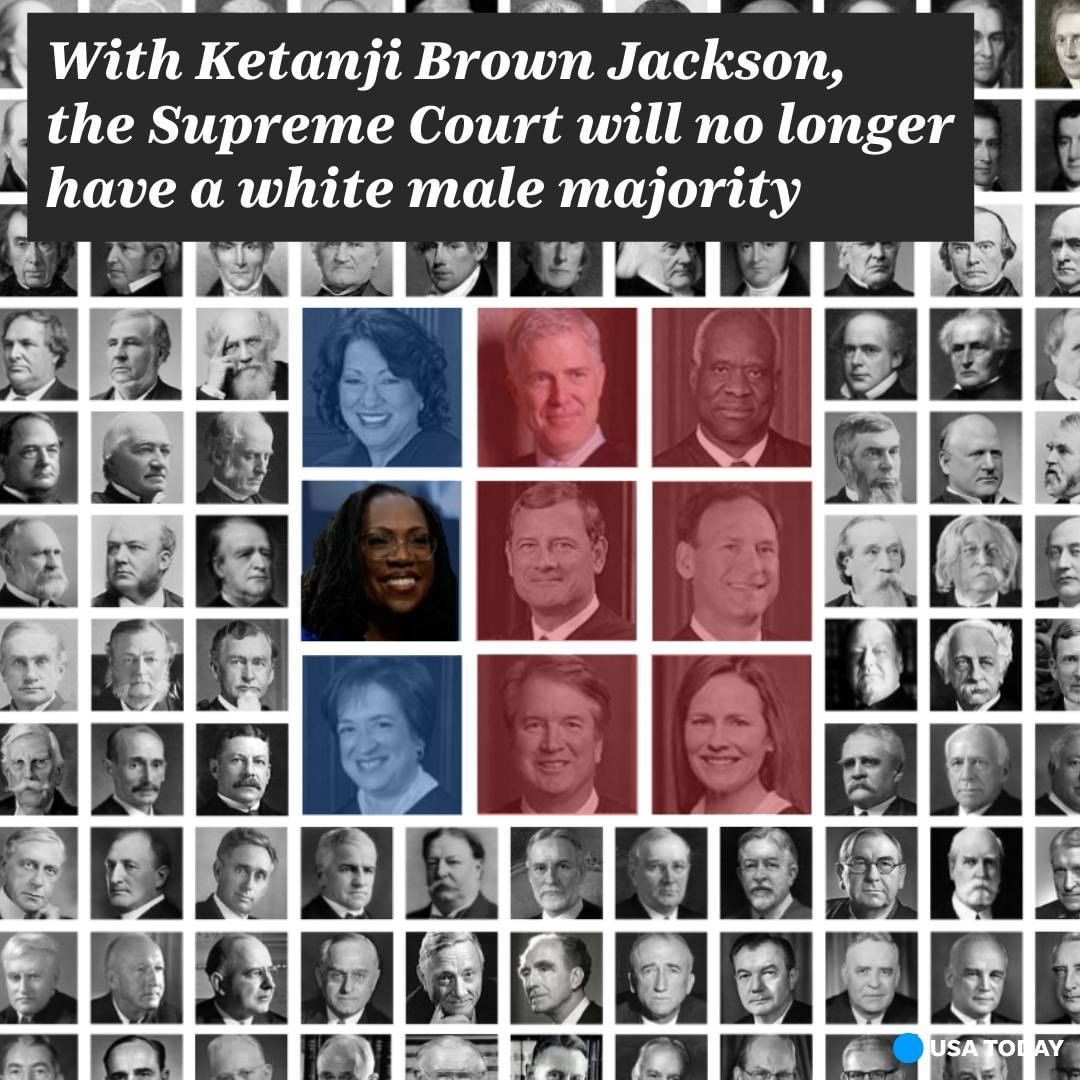
Ketanji Brown Jackson's confirmation will make the Supreme Court's next term the most demographically diverse in the court's 233 years. For the first time, it won't have a white male majority.
When Jackson, the first Black woman to join the court, replaces retiring Justice Stephen Breyer later this year, it will be the first time women and people of color will outnumber white men. The court's nine-member bench will include two Black justices and four female justices.
"It has taken 232 years and 115 prior appointments for a Black woman to be selected to serve on the Supreme Court of the United States," Jackson said Friday on the South Lawn of the White House. "But we've made it. We've made it. All of us."
Thurgood Marshall, the first Black man to serve on the Supreme Court, was nominated by President Lyndon Johnson 1967. It took another 14 years and five new justices before Ronald Reagan nominated the first female to the court: Sandra Day O'Connor in 1981. The effort to build a more diverse court really took off after Clarence Thomas joined in 1991. Since Thomas, an equal number of men and women have been seated, including the first Hispanic justice.
Jackson used much of her speech to thank those she said made her rise possible. They included her grandparents who did not get past grade school; her parents educated in segregated schools; her Harvard College roommates; mentors including Breyer; senators and White House aides; and her family. Jackson's husband, Patrick Jackson, beamed from the front row as they watched.
"Judge Jackson’s confirmation was a historic moment for our nation," Biden tweeted after the confirmation vote Thursday. "We’ve taken another step toward making our highest court reflect the diversity of America. She will be an incredible Justice, and I was honored to share this moment with her."