
Date uploaded: 2022-03-30 17:33:10
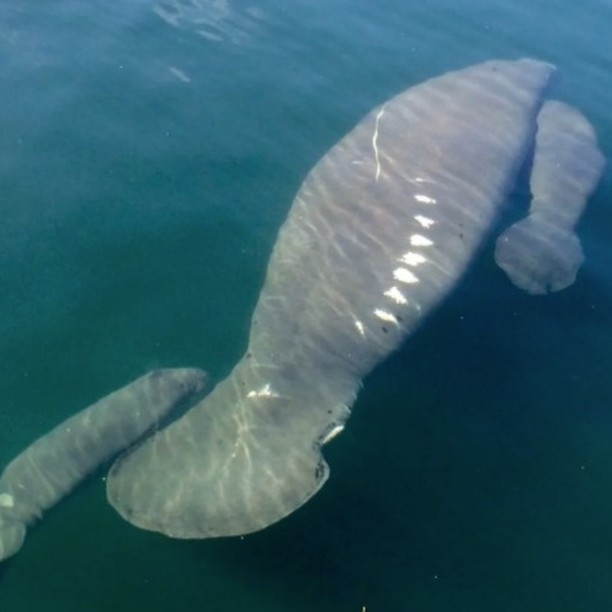
It's Manatee Appreciation Day!
The manatee or "sea cow" is a gentle vegetarian with no natural enemies, but its numbers are threatened by collisions with boats and marine debris, loss of warm-water habitat and red tide.
The U.S. manatee population had been on the rebound. Enough that the Fish and Wildlife Service determined in 2017 their numbers had improved to “threatened” from “endangered.” In recent years, though, several factors combined to drive manatee deaths to a record high.
Last year, preliminary data shows that there were more that one thousand reported manatee deaths in the Florida — nearly double the five-year average — with most dying of starvation.
Manatees are slow-moving, seagrass-eating marine mammals. The Florida Manatees spend up to eight hours a day grazing on seagrasses and other marine or freshwater vegetation, eating up to 10% of their body weight in aquatic vegetation each day. They rest from 2 to 12 hours a day either suspended near the water's surface or lying on the bottom in shallow areas, usually for several hours at a time.
One of the threats to manatees is cold stress. Manatees need warmth to survive. They’re vulnerable when the water temperature drops below 68 degrees. Unlike whales and dolphins, manatees lack a protective layer of blubber. Their round appearance is not from fat but because they have large digestive tracts to process the vegetation they eat.
Click the link in our bio to learn more about the Florida manatee.