
Date uploaded: 2022-02-11 18:30:33
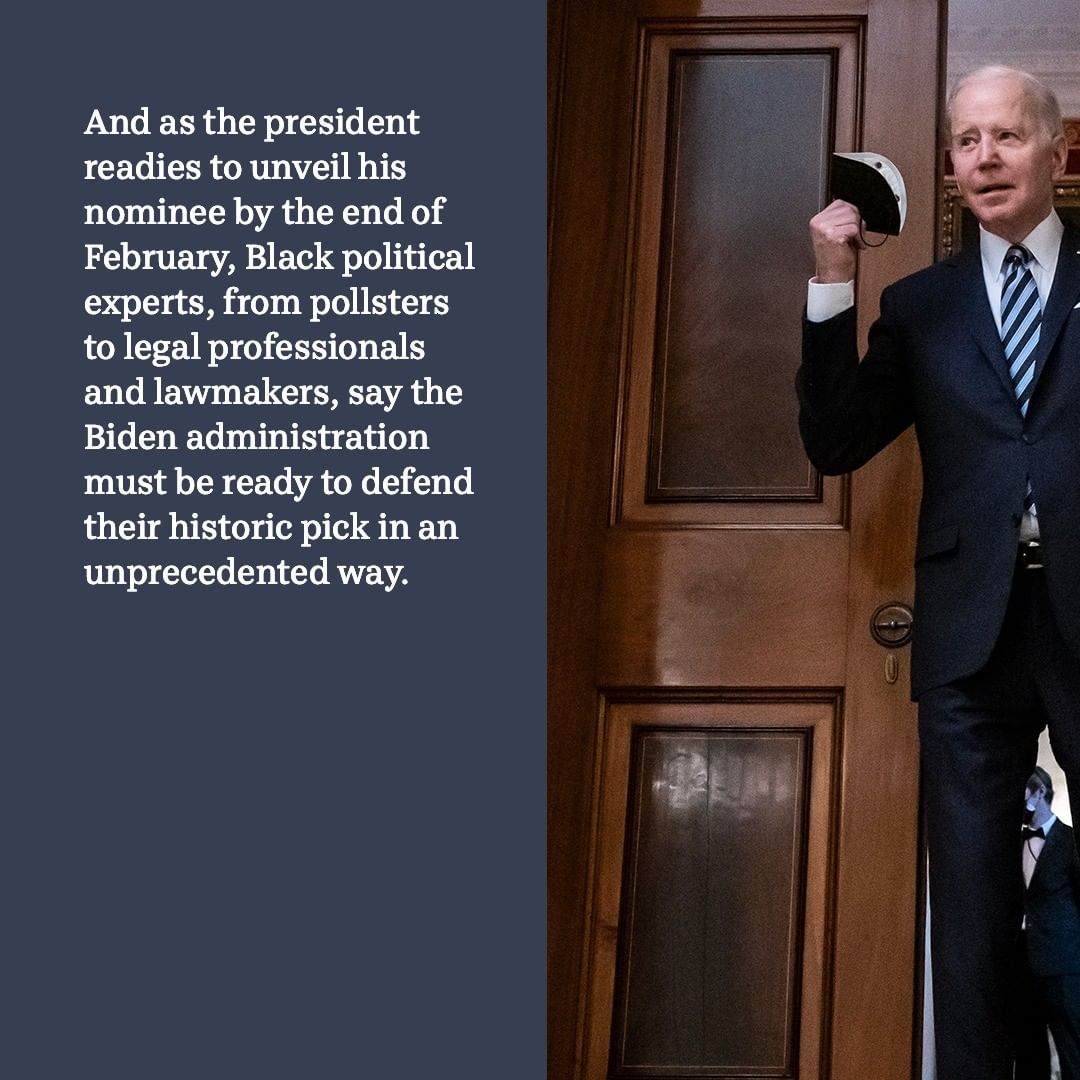
President Joe Biden has brought renewed attention to the diversity of the Supreme Court as he reaffirms his commitment to appointing the first Black woman to the nation's highest court.
But experts and advocates of judicial diversity also want to remind people that the struggle for representation doesn’t stop there.
The backlash to President Joe Biden's pledge to nominate a Black woman to the Supreme Court has laid bare many Americans' difficulties talking about race, from the lack of a shared vocabulary to ignoring past de-facto rules that favored white men.
Unlike his predecessor, Donald Trump, Biden has not formally unveiled a short list, but several names consistently surface as possibilities. D.C. Circuit Judge Ketanji Brown Jackson, 51, was on President Barack Obama's short list after Associate Justice Antonin Scalia's death in 2016. Jackson, a former Breyer clerk, was confirmed to the U.S. Court of Appeals for the District of Columbia Circuit on a 53-44 vote in mid-June.
Leondra Kruger, an associate justice on the California Supreme Court, worked in the Justice Department for the Obama and George W. Bush administrations. Kruger, 45, argued a dozen cases at the Supreme Court during those years before she became one of the youngest ever named to the state's high court.
Michelle Childs, 55, has a less traditional background, serving as a state labor official before Obama nominated her to the federal trial court in 2009. She is the third woman to serve as a federal judge in South Carolina. Biden nominated Childs to serve on the D.C. Circuit in December.
To read more, click the link in our bio.
#supremecourt #biden #blackhistorymonth