
Date uploaded: 2022-02-09 19:49:36
Every day, Kechinyere Iheduru-Anderson walked into work at a Massachusetts hospital with her fingers crossed, holding her breath.
The Black, Nigerian-born nurse braced herself for the demeaning treatment.
Her supervisors brushed off patient taunts. Her white counterparts doubted the accuracy of her patient charts, looking for faults. She watched as more senior staff rudely bossed around Black nursing assistants.
She’d pray her caustic co-workers weren’t on the surgical unit schedule that day.
"Or you hope that when you go to work, that they get floated to another unit, just so you don't have to work with them," Iheduru-Anderson said.
For years, she said, higher-ups dismissed her complaints, citing the longtime careers of some of her co-workers.
“Are you sure you didn’t misunderstand?” they said.
Iheduru-Anderson stuck it out. A nurse of three decades, she lives in Mount Pleasant, Michigan, and directs Central Michigan University’s nursing program. She’s dedicated her career to researching racism within the nursing field and mentoring young nurses of color.
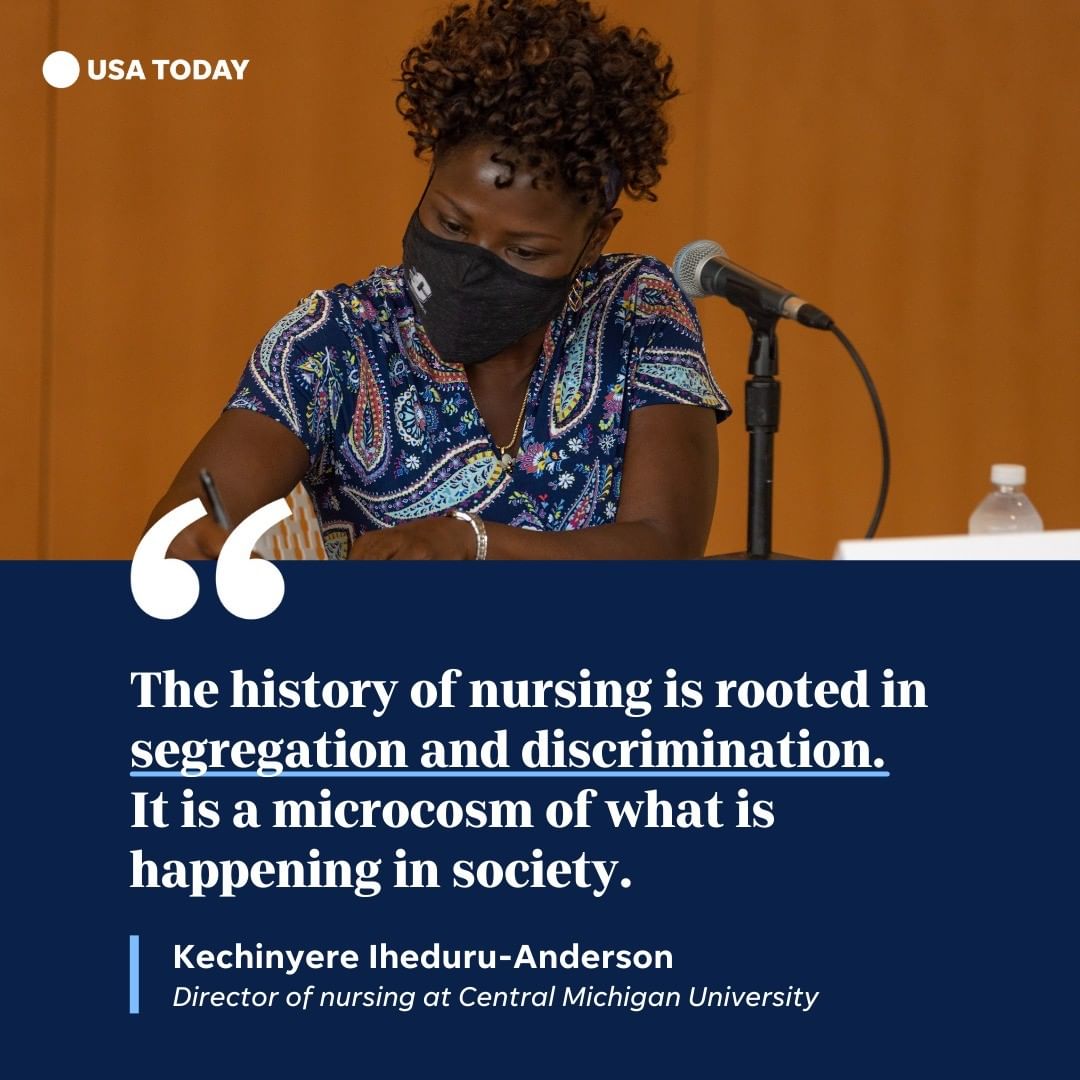
“The history of nursing is rooted in segregation and discrimination. It is a microcosm of what is happening in society,” she said. “For the most trusted profession, it is kind of ironic, isn't it? The profession that is supposed to care for people that cannot even care for its own constituents.”
A survey of more than 5,600 nurses by the National Commission to Address Racism in Nursing reported an overwhelming majority of nurses of color say they experienced or witnessed racism. Iheduru and others draw on their experiences to fight it.
Read more at the link in our bio.