
Date uploaded: 2021-12-25 17:00:17
The world's flagship science instrument took flight from South America early Saturday, a high-stakes mission that, from well beyond the moon, will peer deeper into the universe's 13.8 billion-year history than ever before.
The $10 billion James Webb Space Telescope vaulted off the pad Christmas morning aboard a European Ariane 5 rocket, in the South American territory of French Guiana. The 7:20 a.m. liftoff marked the first true test for the 10-year mission.
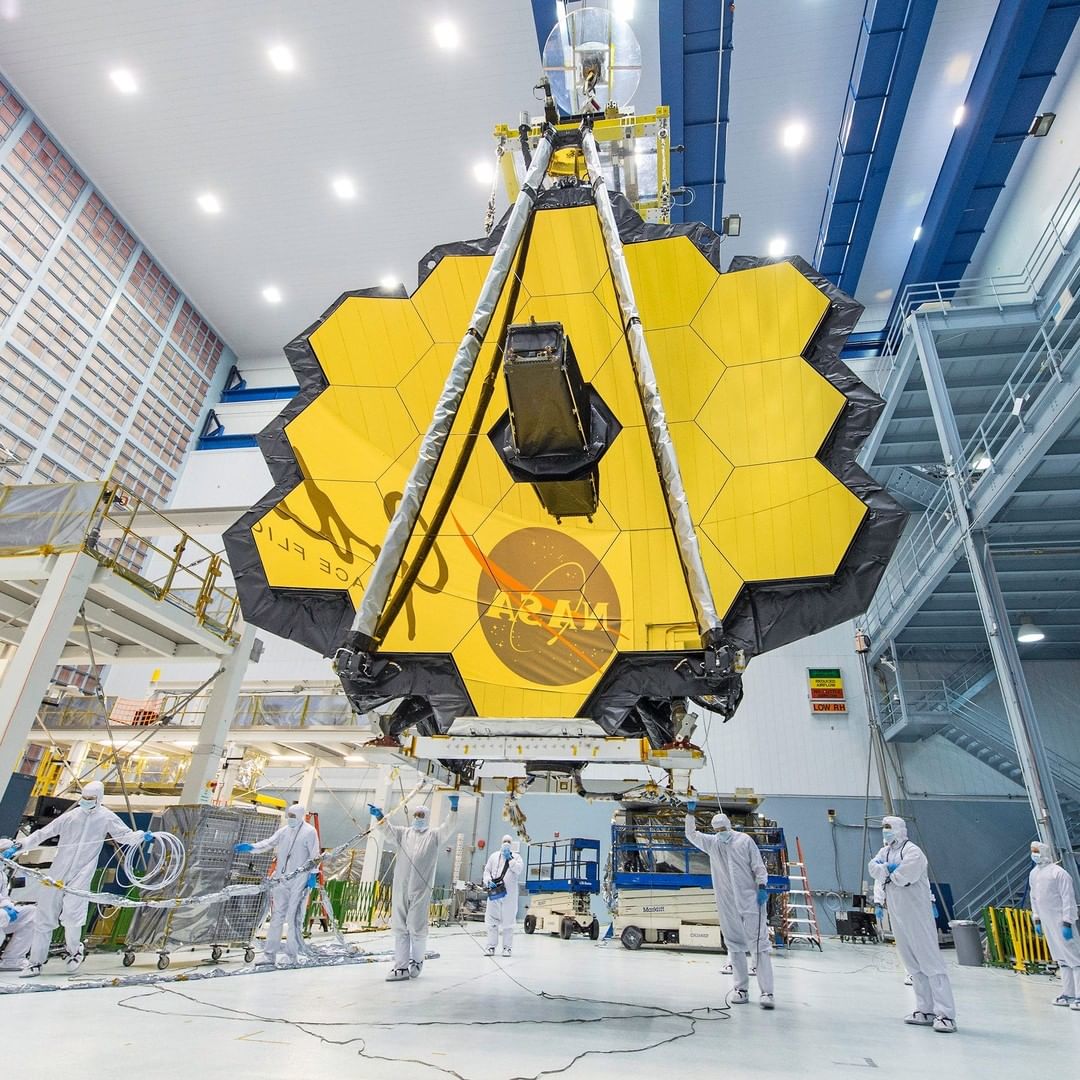
Once unfurled and in its orbit beyond the moon about a million miles from Earth, Webb will use a massive, 21-foot primary mirror made up of 18 gold-coated hexagonal tiles to study the cosmos. Its standout capability is infrared observation, meaning obstacles like dust clouds won't be an issue. Scientists will be able to see the early phases of star formation and even the atmospheric compositions of promising far-off planets.
Swipe to see NASA technicians lift the James Webb Space Telescope's primary mirror using a crane at NASA’s Goddard Space Flight Center in Greenbelt, Maryland, in 2017, and a rendering that shows the spacecraft fully deployed at its target location nearly a million miles away from Earth.
Tap the link in bio to learn more about the mission. 🛰🚀
📷: Photo 1: @apnews
Photo 2-3: Courtesy of NASA